
“I had no idea researchers paid illustrators to make graphics!” –Me, five years ago, in a conversation with my PhD advisor.
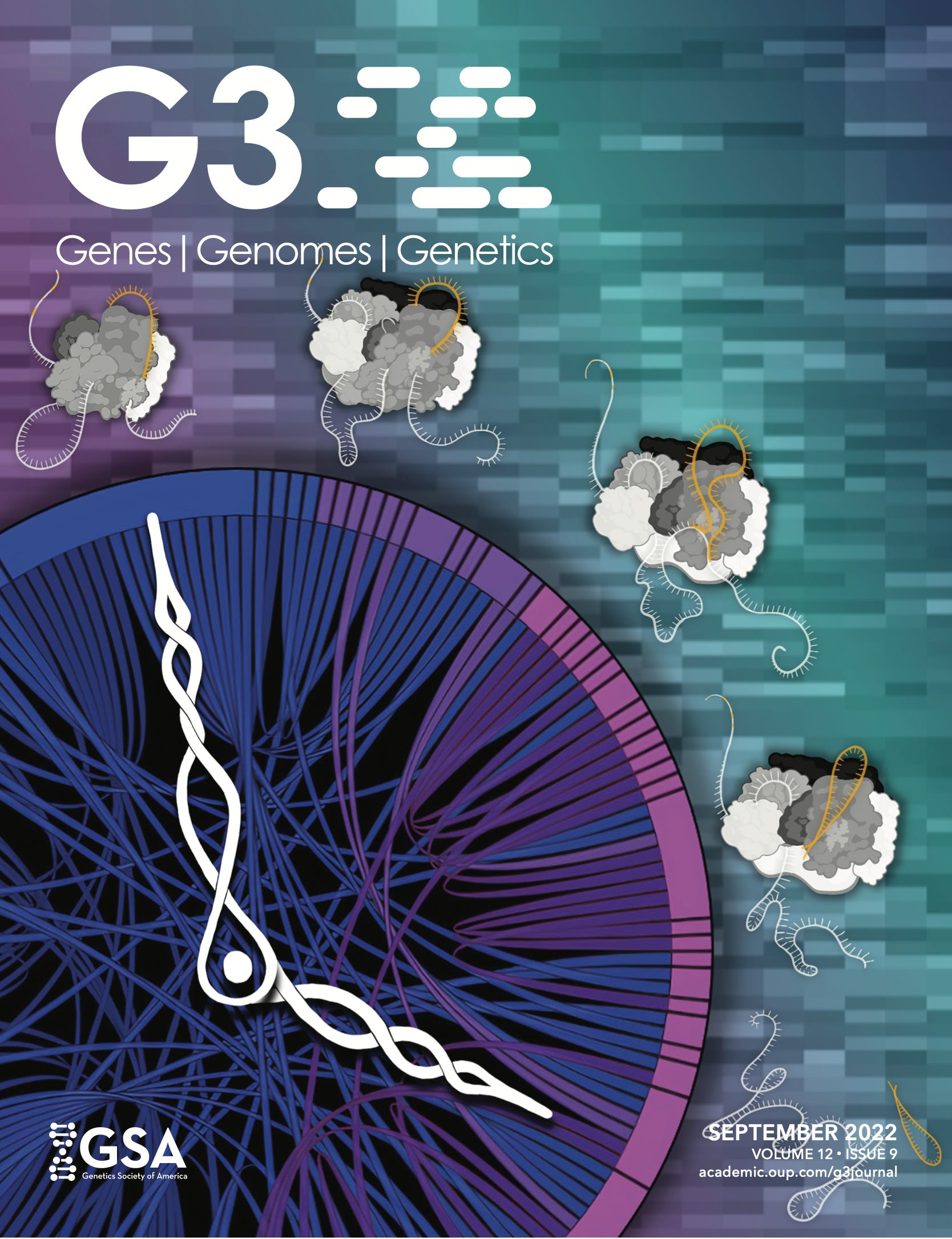
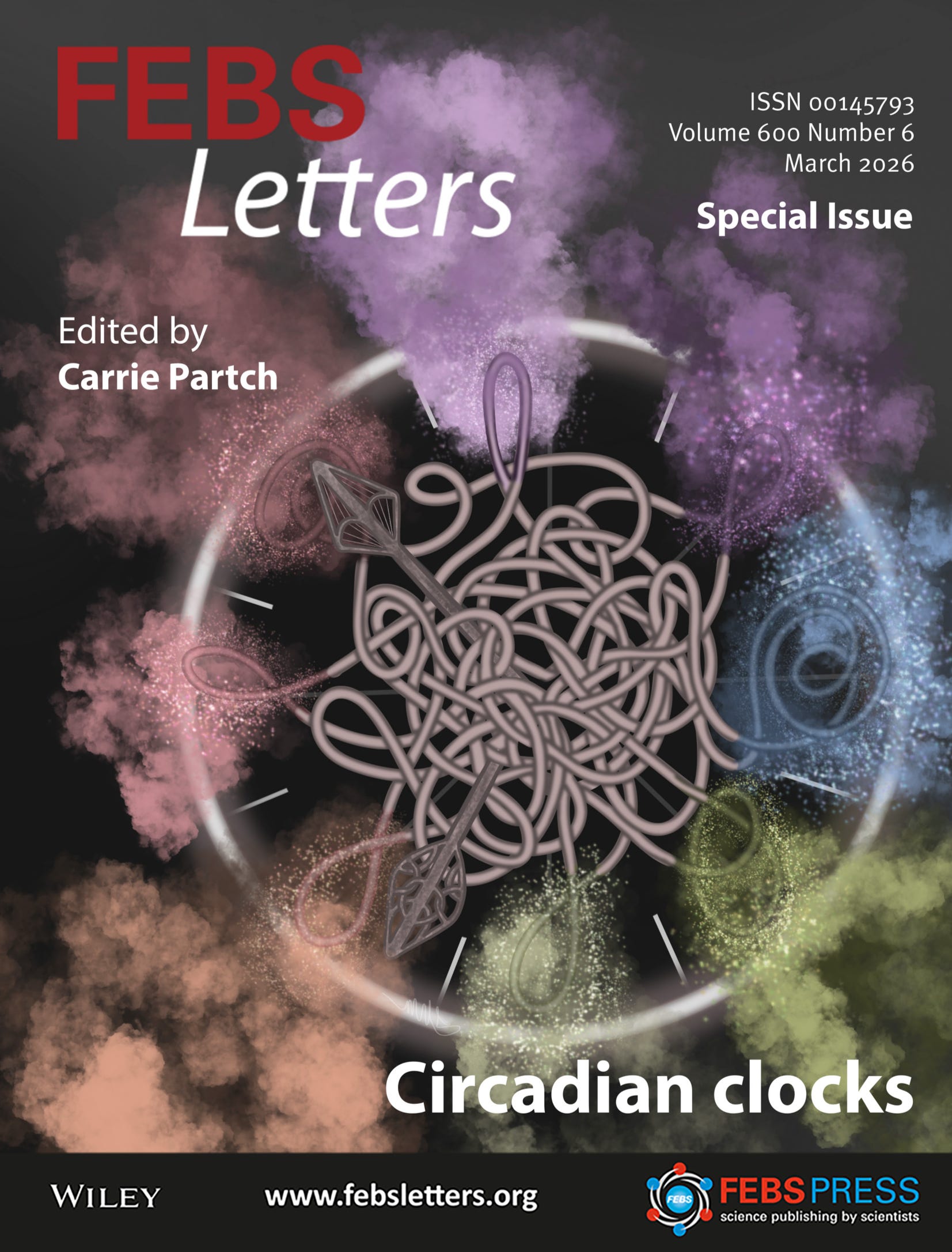
That conversation with my advisor sparked my interest in becoming a Scientific Illustrator, using my creative skills as an artist to enhance my science. In pursuit of that goal I set myself two concrete goals during grad school: 1) publish at least one cover art and 2) create as many science illustrations as possible. Shocking even myself, I published two cover art pieces and created over 12 scientific illustration pieces over the course of my PhD program. The first cover art (Figure 1) was published soon after I started my PhD program, and the second (Figure 2) was in my last semester. Having these two pieces bookend my PhD program felt like an affirmation that I was meant to be a Scientific Illustrator.
So, with zero resources and no idea what I was doing, I started my own Scientific Illustration business—GraphicaBio Studios—a few weeks after graduation. Grad school is great at teaching you how to do things with zero resources and no idea of what you’re doing. So, with guidance from other professional illustrators, I bumbled my way along into creating a professional logo, website, social media accounts, Patreon, pay structures, and project protocols. I specialize in publication figures—including figure panels, graphical abstracts, and cover art—but can also help create lab logos, visual lab website designs, and visual educational materials. My PhD training and 10+ years’ experience in biological research is a real asset, as I can easily understand the scientific context, know the requirements for publication, and have a built-in network for my services.
Even though being a Scientific Illustrator has been my dream job for several years, you may have noticed academic science is having a tough time, which may lead you to ask the question: Why would I choose to do this now? For a bit of background—and JUNC has written about this recently (Dude where’s my grant?)—the national structure of funding for academic science in the U.S. is in the process of being completely overhauled, and with it the stability of research is suffering. Although the previous system was imperfect, it was a functional system that supported research activities on a large, predictable scale and timeline for nearly 85 years1. Unfortunately, there is little of that historic stability left, and labs have to prioritize where they spend their funds. I’ll let you decide if a scientist would prioritize a Scientific Illustrator over materials and reagents to perform their research. So why start a business that seems like a bad investment? Because I deeply believe in doing the work. (Aaaaand maybe I’m not giving up hope in the U.S. academic science system just yet).
I want more for my business than creating pretty illustrations. I want to support making science accessible to non-scientists (aka science communication). Science has historically been seen as “something mysterious that happens in the ivory tower,” which is largely true, and perpetuated by previous generations of scientists. During the pandemic, most people saw the consequences of omitting public science education; misunderstandings around the scientific methods hurt the public’s perception of and trust in science. Scientists attempted to correct this, but I think it was too little, too late. I’m not saying science as a national institution is perfect, because it has its many faults, but it was an imperfect system that was functional. I came into science to be involved in fixing a somewhat broken system, not to watch it crumble. Although it’s hard to see widespread distrust in science on a national level (again, we partly have ourselves as scientists to blame), I still want to be involved in righting some of this.
This is part of why I love Scientific Illustration. It bridges gaps between technical science and regular people to help them understand certain aspects of science. Who doesn’t love a pretty, science-themed picture? It connects people emotionally to science and kickstarts great conversations. By using my skills as an illustrator, my goal is to remove some of the mystery from science: how scientists do research, the tools they use, how researchers think, why we think science is so cool, and why we think non-scientists should think science is so cool. By providing these things as open-access and free to all, I hope I can effectively communicate science to anyone and remind them why science is foundational to our society and ourselves.
Everyone who pays federal or state taxes in the U.S. funds scientific research, whether they are aware of it or not. A portion of the taxes you pay goes into the budgets of federal programs like the National Institutes of Health (NIH) and the National Science Foundation (NSF). Because these are both publicly funded programs, I believe the research they produce should not only be open-access and available to everyone, but also accessible and able to be understood by all. However, scientific articles are most often written by scientists for scientists and can be filled with “jargon” that makes nonscientists’ heads spin. Although there are a couple of journals whose mission it is to translate science into understandable articles (like Scientific American, or Science News), they are mainly focused on flashy, mainstream topics and less on “hard” science or how science works.
My passion behind science communication started as a kid, but I really got into it during college. Growing up, I hit many of the criteria for what would eventually classify me by the NIH as an underrepresented minority because I am an “individual from a disadvantaged background2.” This is mainly because I grew up in a rural area with few resources—economic and educational—and my parents lived below the poverty line. In addition to this, I was homeschooled from K-11th grade and my only exposure to science was through textbooks and video teachers. My first hands-on experience in a science lab wasn’t until college! All these pieces together should have pushed me out of a degree in science, or even college. To be honest, I’m not really sure why I gravitated toward science in the first place. It could have been my obsession with the sleuthing and deductive reasoning of Sherlock Holmes, or maybe it was because I had a cool experience doing a dissection with my friend’s mom. Whatever it was, it sparked a love for biology which was further nurtured by my dear college science professors, which set me on the path to pursue science as a career. I majored in Biology in undergrad, worked as a research technician for eight years, then started my PhD program. In every institution I’ve worked in, science communication was heavily promoted, and I took any opportunity I could to teach others about how cool science is. Most of this “Science Outreach” was geared towards elementary school kids—going into their classrooms to teach science lessons. It’s odd how different parts of your life intended for one thing end up helping you in an unexpected way: I was raised very religious with stereotyped gender roles (e.g., being wife and mother) and I got a lot of training around caring for, teaching, and leading groups of kids. Even though religion is no longer part of my life, that training made for great transferable skills I was able to utilize in these science outreaches. Now, with my own two kids, I’ve had a lot more practice in translating and explaining science concepts.
It has been such a long road to becoming a Scientific Illustrator, and I am so excited to help other scientists promote their research through graphics. I would highly encourage scientists not only to use these for publications and grants, but also to seek out other forums that allow you to reach a broader audience. Once people start getting excited about science and begin to understand it, the better off we will be. Science and art are inextricably linked in my brain, and I love using them together to build a better perception of science.
References
1. WWII and the evolution of US federal research funding | Science. https://www.science.org/doi/10.1126/science.aej2321.
2. NIH URM Eligibility. Faculty Facilitator https://www.facultyfacilitator.com/nih-urm-eligibility/ (2024).