

In Parts 1 and 2 of this series, Selling Ambition and Selling Stability, I have discussed some of the hallmarks of interesting ideas and successful pitches. These revolve around clear identification of the problem you aim to solve and who will ultimately benefit from it. Without these two aspects secured, most projects and ideas are doomed to fail. I have a personal interest in this idea-forward thinking.
Recently, I was pursuing a startup company idea of my own which stemmed from my graduate research efforts. The technology was a cell-based platform that allowed for rapid morphological assessment for drug and gene screening. Put simply, it was a tool I developed for my own research that allowed me to more quickly examine how the shape of cells changed when studying the effects of drugs. This platform directly solved a problem I was having in that certain studies were taking me too long to set up and analyze. I assessed this as a potential drug-screening platform that other researchers or companies may be interested in. I theorized the promise of my platform was the same as organ-on-chip devices.
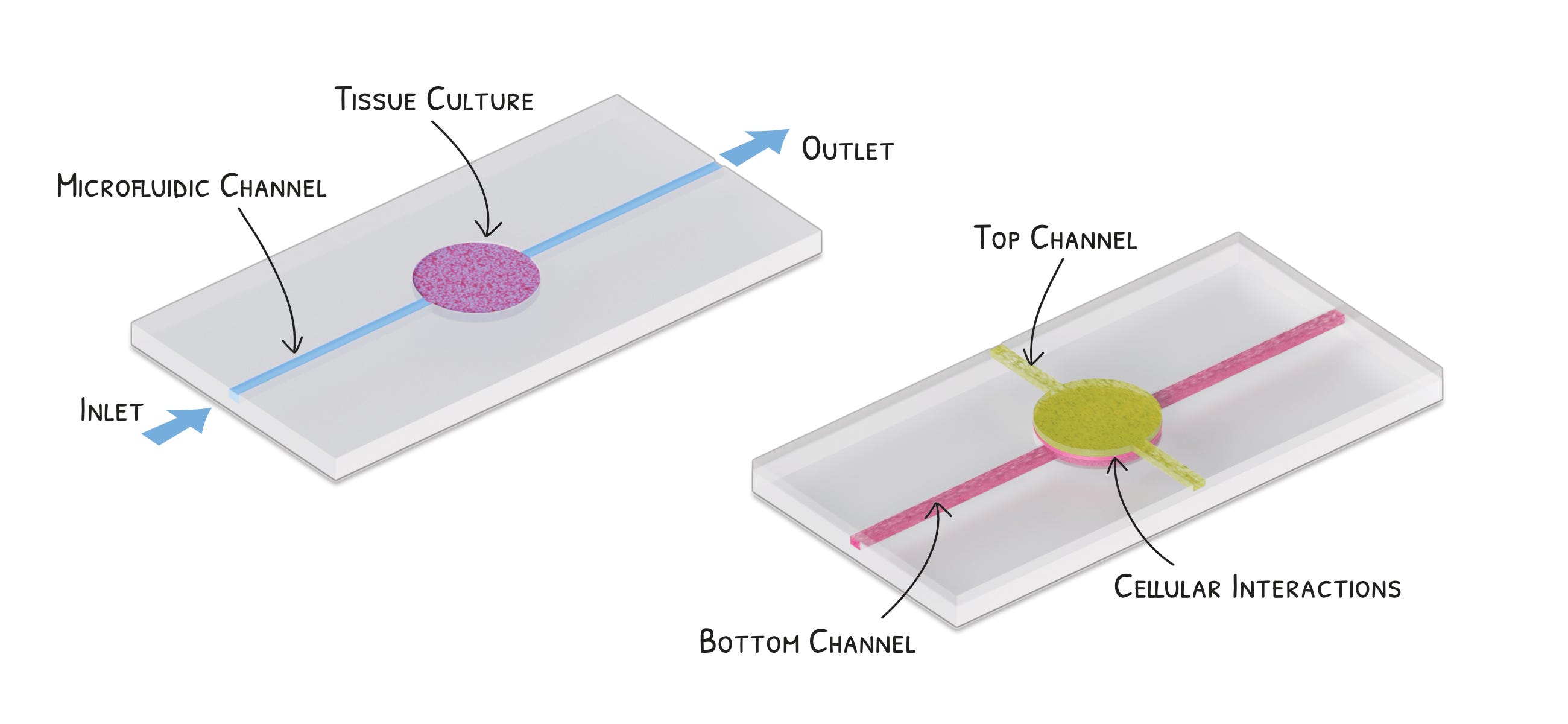
Organ-on-chip devices aim to replace animal models
Organ-on-chip is a major segment of the biomedical engineering research field. These devices promise to provide a miniaturized version of human organs we can test disease treatment on. Mice are the current gold standard for treatment effects on organs. A mouse model provides several problems: Mice have different immune systems, different genomes, and different-sized blood cells. Work by the Eniola-Adefeso group at the University of Michigan found the difference in shape of blood cells between animals affected the ability of a drug product to pass through the blood stream.1
Mice also significantly slow down drug-development efforts. For a single cancer treatment dose, researchers can use at least six mice to test toxicity and efficiency.2 The accuracy of a given measurement increases when you add more samples to the study. With more mice, the amount of effort to ethically raise, euthanize, then analyze increases the time and money needed for a study. Large pharmaceutical companies have the means to allocate these resources, while research labs and startup companies struggle.
Despite wide acceptance of the limitations, mice and animals have been the standard required by the FDA before in-human testing can begin. There are now serious efforts to start replacing this. In 2022, the US government passed regulations to remove the requirement for animal testing to establish a drug’s safety and effectiveness.3 The FDA has since put forward ideas to replace the use of mice in clinical trials.4 They launched the Innovative Science and Technology Approaches for New Drugs (ISTAND) program in 2025 to specifically help guide these efforts to replace all animal testing by 2030.5 Emulate, a Boston-based organ-on-chip company, is near the end stages of getting their chip for drug-induced liver injury (DILI) approved. As of November 2026, they have been accepted into the FDA’s pilot program.6 This moves them closer to being the first FDA approved organ on chip.
This excites me specifically as a biomedical engineer who specializes in tissue engineering. Small-scale organs grown in the lab have the potential to rapidly improve the rate at which drugs can be approved. Instead of a 20-year development timeline to get a new drug to the clinic, we may only need to wait a quarter of that time. My human cell-based platform may have a lot of use cases then.
Where organ-on-chip starts to fail
When I spoke to other researchers in hopes of selling my platform as a tool, I didn’t get the reception I thought I would; the platform was too specialized. With me as the customer, the problem statement was clear, and the solution I provided myself worked perfectly. My field of research, cell chirality, is a topic only a select group of labs in the world focus on. Other researchers wanted much more substantial proof this would work for other applications before they would take another look at it.
My platform faces the same challenges lab-on-chip or organ-on-chip devices are facing. The issues stem back to the same topics I discussed in Parts 1 and 2 of this series: problem statement and customer identification.
The majority of organ-on-chip development is currently happening at the academic level. Researchers at universities are building their own platforms to study the specific problems they are encountering. Referring to Part 3 of this series, organ-on-chip groups appear to be acting as scientists first. We still don’t understand a lot of the processes that lead to tissue and organ development, so we need to ask and answer these questions experimentally to find out. This work is necessary to move the field forward. However, it fails to immediately address the problem for drug testing. Additionally, these lab-focused chips are not designed for large-scale use. It would be beneficial if all academic labs across the world could adopt these technologies at once to gather more information. Almost every technological university across the country has the capability to make these devices in small batches. Academic researchers would rather try to replicate the device on their own to save money and prepare another methods paper.
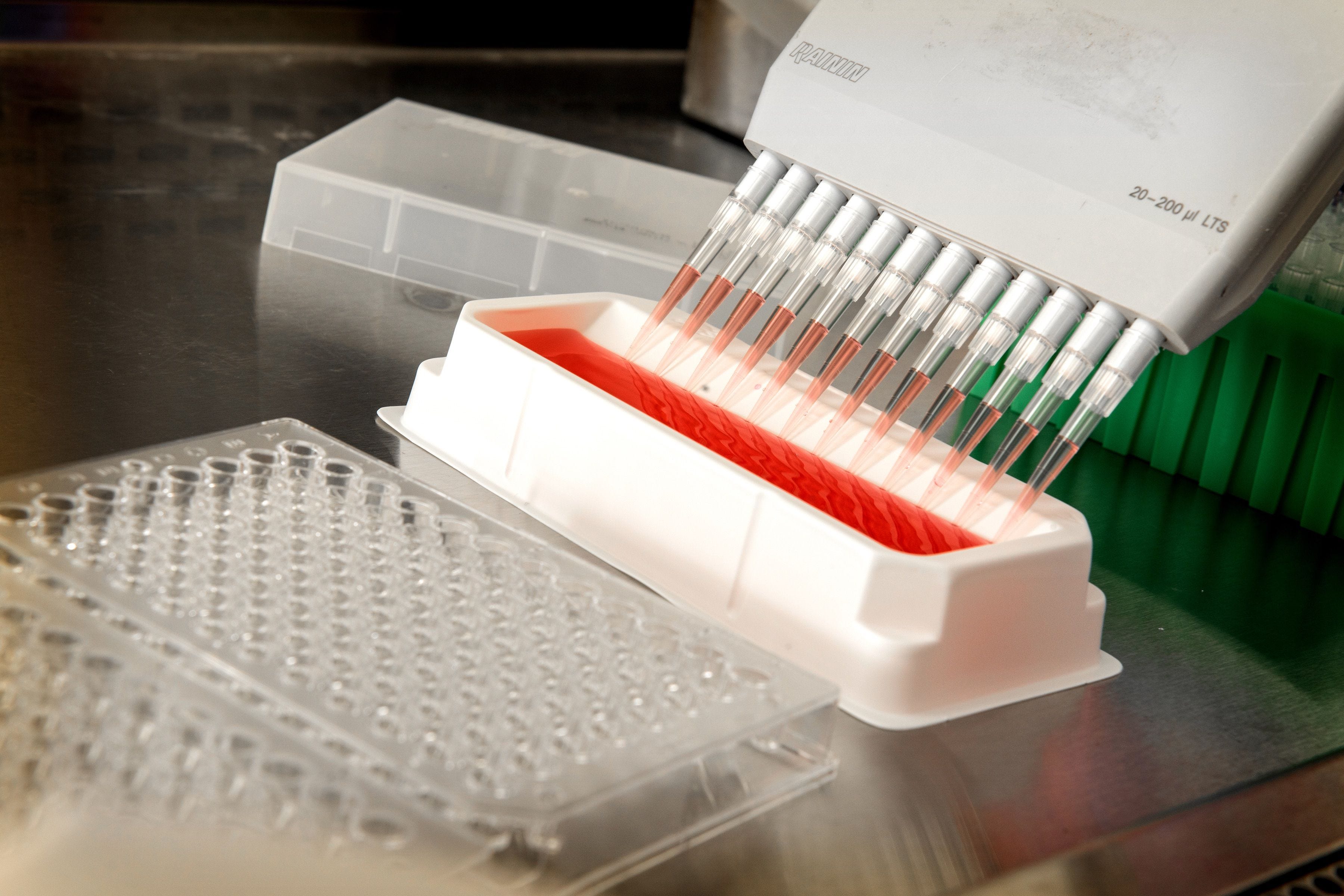
Throughput, or how much testing a researcher can do at once, is another issue when it comes to organ-on-chip. Academic and industry researchers depend on being able to test many things at once with repeatability. The 96-well plate, an 8-by-12 array of wells smaller than the width of a pencil, is the standard. Microscopes, plate readers, and several other pieces of lab equipment have been specifically engineered to examine these plates. Organ-on-chip devices are usually much bulkier. They often require fluid flow inside of the device and can be larger than a quarter. Companies like Emulate and Mimetas have spent a lot of development time and money to make devices that run at 96-well throughput but often require special machinery to use and analyze them. The design of these plates is inhibitory for adoption.
Finally, organ-on-chip devices often fail to incorporate interactions between different types of organs. The DILI chip mentioned so far only models the liver and its cell. In the human body, different organs — the intestines, heart, brain, and skin, for example — affect the way the liver acts throughout the day and during disease. Liver-on-chip devices alone cannot incorporate this complex behavior. Several research groups and companies are currently developing these multiple organ-on-chip, or “body-on-chip,” systems for specific interaction. Due to their complexity, these are further away from wide use than the DILI chip by Emulate. Additionally, the issues with throughput become exponentially harder when more tissue systems are added.
Altogether this highlights two key issues that keep people from adopting this technology quicker. One is the design of an organ-on-chip device for complex analysis. The other is repeatability and trust. No device has been fully approved by the FDA yet, and animal testing is still necessary. Newer pharmaceutical companies are highly unlikely to take a chance on developing organ-on-chip testing pipelines when there is no guarantee they will take off any time soon. Larger established companies may be interested but only as a bet on the long-term returns if it ever gets completely approved.
Where do I think the field goes from here?
The issue of design is one that could be addressed with clear identification of the problem statement. What specific data do we need from tissue testing, and can that be applied to simplify organ-on-chip technology to specific designs? I admit this is an oversimplification of the challenges the field faces. Microvasculature is one example I am close to. Researchers in my lab have used individual-engineered micro vessels to study how certain drugs affect the natural alignment of cells.7 If the goal is to study the natural alignment of vascular cells, there are simpler methods that can be used. If the goal is to examine the natural behavior of micro vessels, this is the simplest method and is very low throughput.
The largest issue with the organ-on-chip field is the timeline. Mice and other animals as testing subjects will not be replaced for primary testing anytime soon. More development is needed for the various tissues in the body. The continued work in academia and industry will keep these directions developing. Fortunately, for the time being, it seems that most groups across industry are publishing their results as they gain them. This sharing of knowledge helps more researchers improve their approaches. Despite this, I find it highly unlikely all animal testing is replaced by 2030, or even 2040.
Animal testing is most likely here to stay unless there is a significant advance in a very short time to address the issues we’ve discussed so far. These advancements are not only in the science behind organ-on-chip technology. Organ-on-chip requires better case-by-case problem statement identification, recognition of who the immediate users of the technology are, and targeted design to fit the problems and use cases of these users. Making these points clear makes adoption of new technology quicker, leading to faster acquisition of new knowledge. THIS is science, engineering, design, and art in action together.
Throughout this series, I have addressed many different aspects of what make ideas exciting and successful. First, I emphasized ideas become exciting when you are excited: sell the project by showing the potential for impact. In Part 2, I discussed what makes projects promising to grantors and investors: recognize your audience and tie back to your problem statement to convince them your proposed activities are stable. Next, I discussed the different hats we can wear when addressing problems: Are we scientists, engineers, designers, or artists, and how does that guide the work we propose? Finally, I talked about my personal thoughts on the organ-on-chip field and how the previous three parts affect the current scope of ongoing research and issues.
I hope this series has provided some insight on how you can move forward with new ideas. With these practices and ideologies, I believe any idea can prove fruitful. Maybe the idea doesn’t become a product but instead leads to new research. Maybe you didn’t cure cancer but instead found a better method to conduct research. Maybe you’re not the next Steve Jobs but instead got people to care about a real issue. Ideas can be successful even if they change.
