

Learning science the old fashioned way
I work at a university known for its rigor in engineering disciplines where I’ve witnessed students learn to problem-solve in a changing environment. AI has disrupted the modern model of higher education second only to the effects of COVID. Instead of social distancing and remote learning, students face the challenge of learning skills that evaporate as AI takes over basic computational, mathematical, and research tasks.1 So what’s needed to teach the future scientists and engineers? Today I’m exploring a vision I had while packed into an AI hackathon back in June: In an age when AI levels the playing field for students/new hires entering the job market, I think learning to identify a good problem will become the most important skill employers will hire for.
Before we get to the future, we need to look at the nuance that hands-on, laboratory-based education offers today. Teaching scientific thought and an engineering mindset often requires a mixture of prerequisite knowledge and physical practice (i.e., basic coursework precedes advanced lab classes). For example, imagine you’re learning to use a pipette for the first time in a cell culture lab.
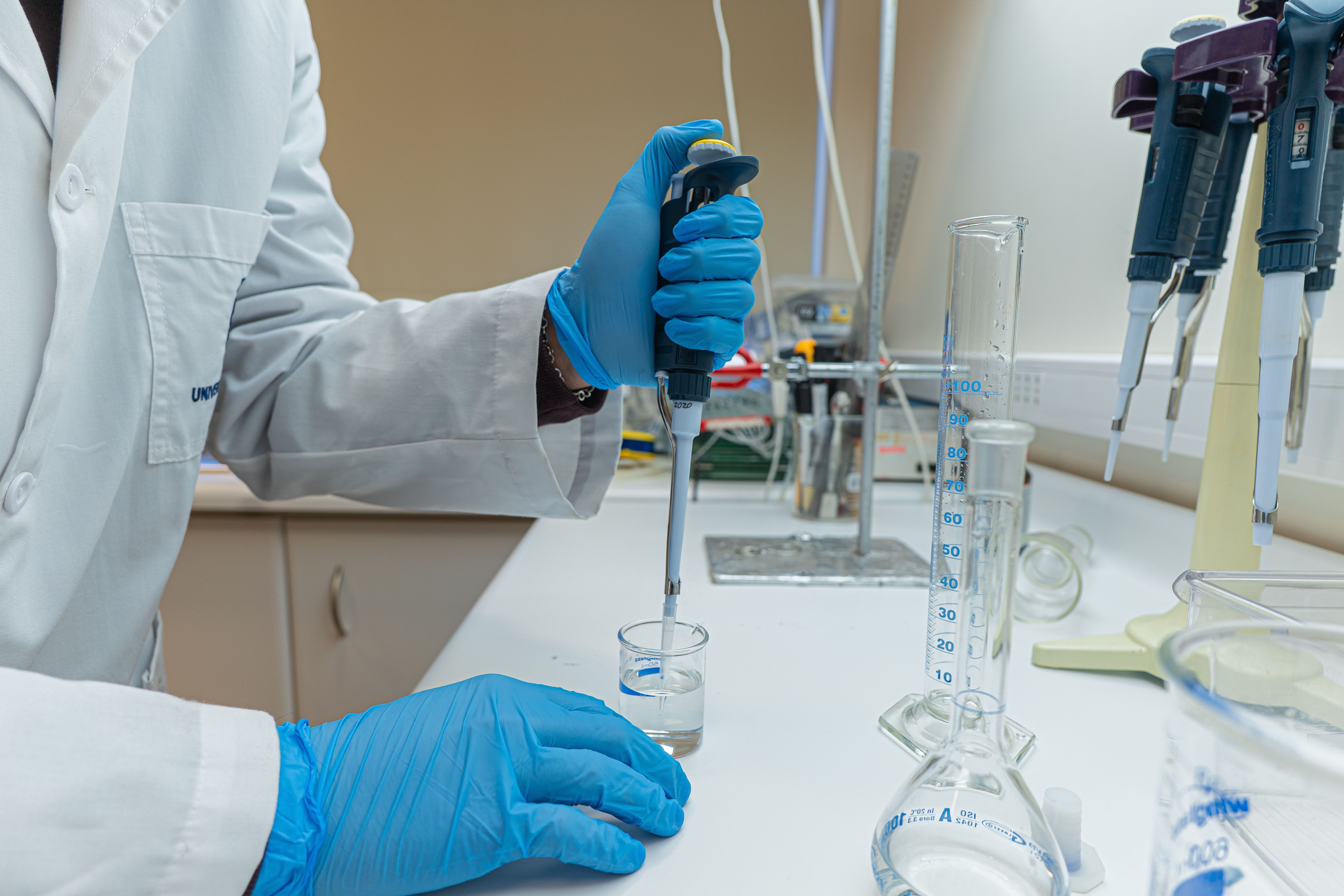
I would tell you to pipette slowly because that is gentler on the cells. However, because neither of us are robots, I wouldn’t tell you to pipette at exactly 500 ul/second, considering a viscosity of 0.001 Pa*S and a 500um bore diameter equals shear stress under 100 Pa. But because we both have taken biomechanics and did those calculations by hand at some point in the past, there is some deep knowledge of why “pipette slowly” might actually be important for the outcome of an experiment.2
How to pipette is just one of dozens of examples where hands-on training paired with hard work turns a student into a scientist. If you can combine classroom material with lab-specific training, you will end up with an intangible skill. This is referred to as having “Magic Hands” and is something researchers are trying to capture… with AI.
Time will tell if it’s something you can bottle, or if good, old-fashioned in-person learning is the only recipe. I’m leaning toward the old-fashioned endurance race which is graduate school, considering I’ve been hanging around academia for a PhD and a post-doc now for a combined 6 years.
The lasting skills a PhD gave me
Lately I’ve seen a lot of articles try to share the horrors of graduate school with the world. I have little sympathy for complaining about how hard it was. That’s usually the point.
Unfortunately, in graduate school, the challenges you face might be closer to academic hazing than actual training. The reason it’s hard is because the system selects for students with attributes that reflect what the professor sees in themselves. Variations of this argument have been rehashed in many ways and do not serve what I’m interested in wading into now. Instead, I’ve been thinking about the hidden skills and innate talents the program trained in me. Like a rock with hidden qualities in a polishing tumbler, it took years of tumbling around academia to solidify my skills into mastery.
With AI automation coming for the hands-on lab skills I’ve learned, it seems the capacity to do thought work (i.e., think) remains the last stronghold of academic training. Soon this may become augmented by AI as well, even though there are plenty of people who are aiming to prove it will never be as good as them. Fortunately, I do believe there are core skills that will become invaluable in a time when AI removes boundaries to learning.
At the start of any project is the most overlooked phase: problem identification. A good hypothesis is taken for granted because it charts the course for the experiments that should follow. Good business ideas take shape and earn backing because an entrepreneur took the time to find out what the pain point is for their customers. Is finding a good problem a skill? How do we teach it? And how is it taking shape today in our AI-accelerated world of problem solving?
Taste is the trendy version of problem solving
Okay ~taste~ has been beaten to death by LinkedIn bloggers and people posting reels, I know. But I think they miss the real skill here: identifying a good problem. Think about how AI tools change this: When you can do literally anything with a coding agent at your fingertips, what you solve will become more important than how. As a fellow vibe coder, I won’t care that you used Claude or Codex. In the same way I don’t care if you used BioRad over Thermofisher PCR primers. I care that you asked a good question before you started the experiment. That’s the basic science lesson: start with a hypothesis that your solution will either support or disprove, and move us all forward.
So, what does this mean for the future of work? The new hiring strategy will be to find someone who can think independently, explain the company mission, then tell them their job is to solve a problem that will further the mission. With the tools to tackle any challenge, a worker can take on a problem that is interdisciplinary, interesting, and innovative. I’ll give an example from the most recent Hackathon I attended. The project was a tool for Pinterest that could analyze a user’s pinned items then distill the ~vibe~ and plan a real-world vacation or road trip based on the mood. This converts the ephemeral wish list into an actionable plan. This pitch (and working demo) at the Hackathon was a student passion project, but they just made a real feature that Pinterest might be interested in folding into their platform. In this case, one person’s Pinterest passion turned into a potential product.
The idea of picking high-value problems for high-value outcomes is not new, but lowering the barrier to working on it is. AI tools mean I can now build tools to accelerate my research just because it’s there. I have access to far more resources than ever before, but how I use it is the key. I could waste my time forever going down a rabbit hole if I was not trained in a program focused on long-term research and planning. Therefore, learning to think critically and learning to problem-solve will continue to be essential skills, especially in an AI-augmented world.
Consider how many fewer papers you actually read (skim) given Google AI overview, which pulls the three top results relevant to your question?
Learning to solve the eigenfunction-eigenvalue problem for Hamiltonian operators by hand in quantum chemistry may have been my academic peak.